
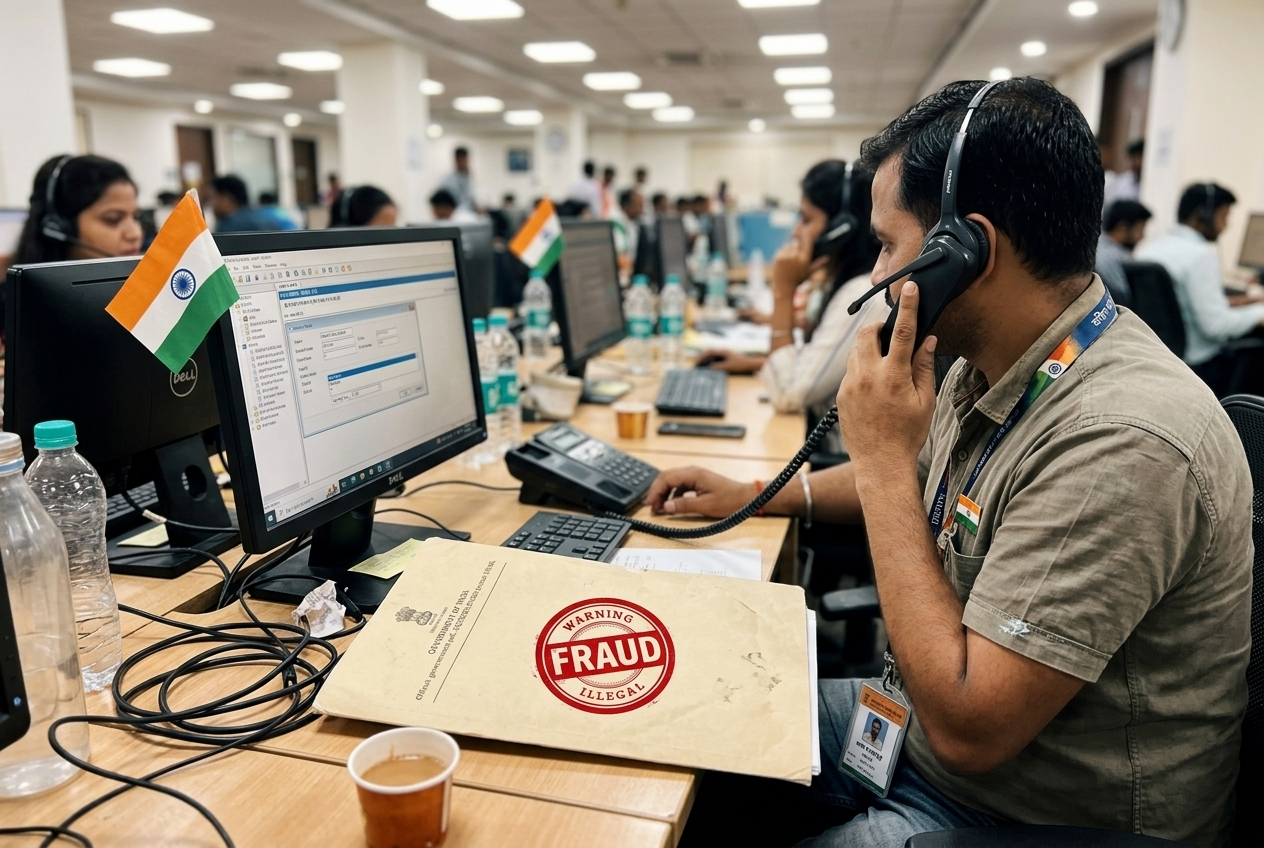
IRS Criminal Investigation Uncovers $885 Million in Elder Fraud, Targeting Older Adults with New Schemes
Beyond general warnings, a surge in government impersonation and investment scams demands specific defenses.
Get Palmelle in your Google results.
One tap. Google shows our reporting higher when you search.
The IRS Criminal Investigation unit recently put out a report that made me pause while I was trying to figure out the best way to explain to my mom why her bank won't let her wire $5,000 to a man claiming to be a Nigerian prince who needs help moving his fortune [c1]. The report detailed an alarming trend: alleged fraud targeting older adults has reached $885 million over the last two years, with a significant portion, $736.82 million, tied to cases initiated in just the past two years [c1]. This isn't just a statistic; it's a snapshot of the relentless pressure my mother, and millions like her, are under. I read it, and the first thing I did was pull over to the side of the road and check my phone to see if she'd accidentally clicked on any suspicious links in emails I'd forwarded her. My complaint about how these stories are usually framed is that they paint a picture of simplemindedness, as if older adults are just sitting ducks waiting to be fooled. The IRS-CI's report, however, points to increasingly sophisticated schemes, like government impersonation and investment fraud, which require more than just a general 'be aware' warning. The common industry response you hear, often echoed by law enforcement, is that awareness and conversation are key to prevention. The FBI Nashville, for instance, stated that awareness and conversation are key to preventing scams and abuse [c2]. But here's the kill shot: the IRS-CI's specific breakdown of fraud types, like the $736.82 million in alleged fraud from new cases in the last two years, shows these aren't just random opportunistic attacks. They are targeted, evolving operations. The real fix isn't a slogan; it's understanding the specific tactics. For instance, the IRS-CI report highlights a rise in investment fraud, which often involves elaborate presentations and promises of high returns, preying on a desire for financial security. The concrete move you can make this week is to proactively ask your parent's bank about setting up 'trusted contact' designations on their accounts, allowing the bank to reach out to a designated family member if unusual activity is detected. This is a specific, actionable step that goes beyond mere awareness.
The direct answer
The IRS Criminal Investigation unit has reported an alarming increase in fraud targeting older adults, with alleged fraud totaling $885 million over two years and $736.82 million linked to cases initiated in the last two years
On this World Elder Abuse Awareness Day, the #FBI reminds families, caregivers, and communities that awareness and conversation are key to preventing #scams and abuse. Visit https://t.co/U4Ux5OJovO to learn more about common elder #fraud schemes, and how you can help protect your…
— FBI Louisville link
. This surge is driven by increasingly sophisticated schemes, particularly government impersonation and investment fraud, as highlighted by the IRS-CI's findings [c1, c3]. The FBI notes that older Americans lost over $4.8 billion to fraud in 2024, according to their Internet Crime Complaint Center (IC3)
In recognition of National Senior Fraud Awareness Day, #FBI Nashville reminds families, caregivers, and communities that awareness and conversation are key to prevention. Older Americans lost more than $4.8 billion to fraud in 2024, according to the FBI’s Internet Crime…
— FBI Nashville link
. This situation demands more than general awareness; it requires understanding specific evolving threats and implementing proactive protective measures, such as bank-side trusted contact designations.
The Rise of Sophisticated Scams
The IRS Criminal Investigation's report reveals a disturbing trend: fraud targeting older adults has escalated significantly, with $885 million in alleged fraud over the past two years and a substantial $736.82 million stemming from cases initiated within the last two years
On this World Elder Abuse Awareness Day, the #FBI reminds families, caregivers, and communities that awareness and conversation are key to preventing #scams and abuse. Visit https://t.co/U4Ux5OJovO to learn more about common elder #fraud schemes, and how you can help protect your…
— FBI Louisville link
. This isn't merely an aggregate number; it signifies a growing sophistication in criminal operations. Schemes are evolving beyond simple phishing to encompass complex government impersonation and high-yield investment frauds, often designed to appear legitimate and trustworthy. The FBI has also noted the increasing sophistication of these impersonation tactics
#FBI Jacksonville joined our partners with @JSOPIO and the Citizens Academy Alumni Association to talk about elder fraud. According to the FBI’s Internet Crime Complaint Center (IC3), criminals continue to exploit older adults through increasingly sophisticated impersonation…
— FBI Jacksonville link
. Understanding these specific types of fraud is crucial for prevention, as generic warnings may not equip individuals to recognize the nuanced deceptions at play.
Financial Losses and Their Impact
The financial toll of these scams on older adults is staggering. The FBI's Internet Crime Complaint Center (IC3) reported that older Americans lost more than $4.8 billion to fraud in 2024 alone
In recognition of National Senior Fraud Awareness Day, #FBI Nashville reminds families, caregivers, and communities that awareness and conversation are key to prevention. Older Americans lost more than $4.8 billion to fraud in 2024, according to the FBI’s Internet Crime…
— FBI Nashville link
. This massive figure represents not just monetary loss, but often the depletion of life savings, impacting financial security and peace of mind. Such losses can have profound emotional and psychological consequences, leading to distress, isolation, and a loss of trust. The sheer scale of these losses highlights the urgent need for targeted interventions and robust protective measures to safeguard the financial well-being of this demographic.
Want more of this?
Mark Palmelle a preferred source and it shows up when you search Google.
Proactive Defenses Beyond Awareness
While awareness and conversation are vital first steps, as emphasized by the FBI [c1, c2], they are insufficient against the evolving sophistication of elder fraud. The IRS-CI's data, showing a sharp increase in new cases and specific fraud types, demands more concrete action. A key proactive measure highlighted by financial institutions and consumer protection advocates is the establishment of a 'trusted contact' designation on bank accounts. This allows banks to contact a pre-selected individual if suspicious activity is detected, providing a crucial layer of defense that bypasses the victim's potential susceptibility to manipulation. Implementing this simple step can be a powerful deterrent against devastating financial losses.
Common mistakes
- Relying solely on general awareness campaigns.
The IRS-CI report indicates a rise in specific, sophisticated schemes like impersonation and investment fraud, which general warnings may not adequately address. A need for granular, tactic-specific defenses exists. - Underestimating the evolving nature of fraud.
Criminals are constantly developing new methods. The significant increase in alleged fraud tied to cases initiated in the last two years suggests that past preventative measures may no longer be sufficient against current threats. - Framing elder fraud as a simple 'gotcha' moment.
Sophisticated scams often involve extensive grooming and manipulation, making it inaccurate and unhelpful to portray victims as merely careless. This framing lets fraudsters off the hook and fails to address the psychological tactics used.
On this World Elder Abuse Awareness Day, the #FBI reminds families, caregivers, and communities that awareness and conversation are key to preventing #scams and abuse. Visit https://t.co/U4Ux5OJovO to learn more about common elder #fraud schemes, and how you can help protect your…
— FBI Louisville link
. While agencies like the FBI correctly identify the problem, the focus on general awareness and conversation risks overlooking the specific, evolving tactics employed by fraudsters [c2, c3]. The significant increase in cases initiated in the last two years, amounting to $736.82 million in alleged fraud, points to a need for more granular information and proactive defense strategies. Simply telling people to 'be aware' is insufficient when faced with complex impersonation and investment schemes that can dupe even vigilant individuals. We need to move beyond broad warnings to actionable, specific measures.
Frequently asked
Sources



More from Scams-fraud → · Back to Perch · Browse all stories
More of this, in your Google results.
Takes one tap, and it applies everywhere you search — not just this page.