
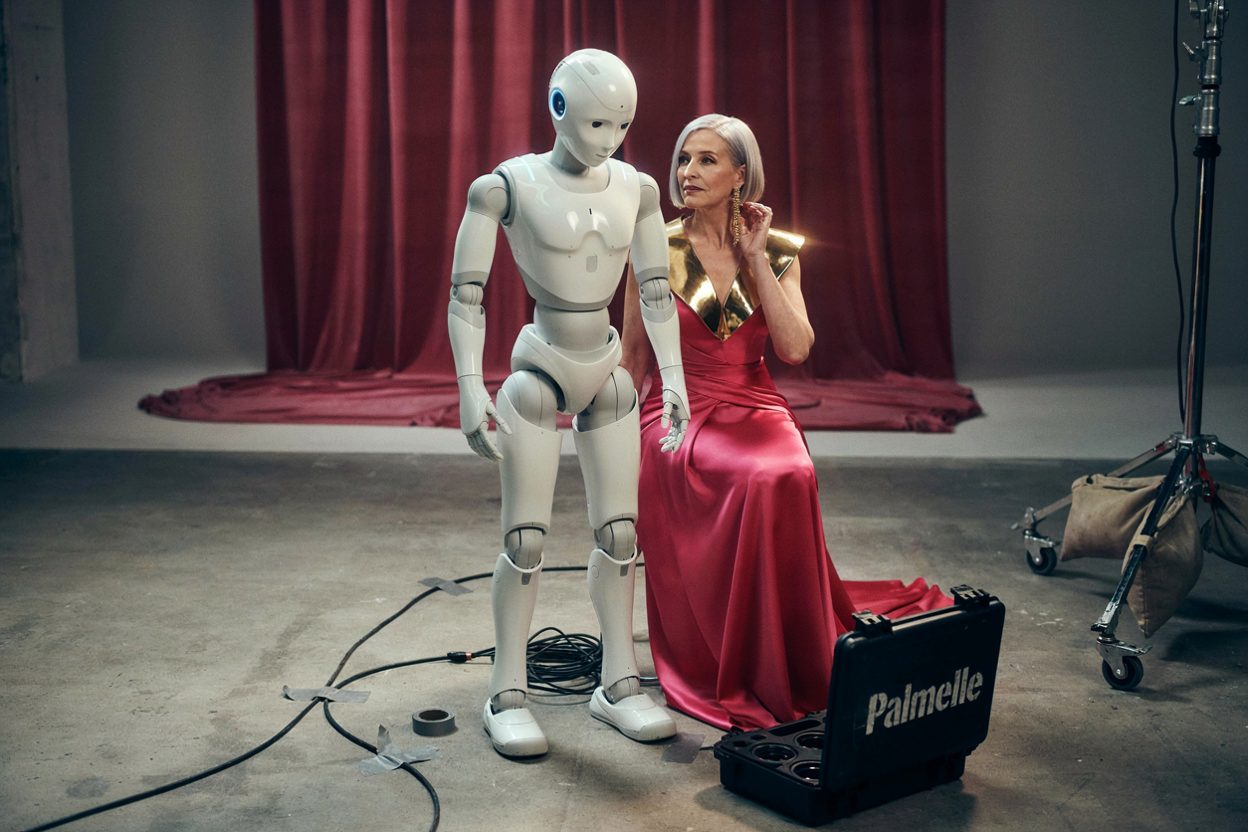
University of Houston Robots: Will AI Companions Actually Help Older Adults Live Better?
Researchers are moving beyond theoretical designs to gather crucial real-world feedback from older adults to shape the future of care technology.
Get Palmelle in your Google results.
One tap. Google shows our reporting higher when you search.
Two weeks ago, I saw a headline about the University of Houston’s Empathetic Lifespan AI & Robotics for Aging (ELARA) Lab testing AI robots with older adults [c2]. My first thought, after I scrolled past the usual 'robots taking over' panic, was about my mom and the sheer, unglamorous grunt work of her day-to-day. I was on my way to pick up her prescription refill, and I pictured her trying to explain to a blinking, chirping machine that she needed her blood pressure medication, not the fuzzy slippers it seemed programmed to offer. And then I remembered the last time a 'smart' device tried to 'help' her: a voice assistant that kept offering to call 911 because it misheard her asking for the time. My complaint about stories like the ELARA Lab’s is that they often gloss over the messy reality of how these things actually get *used*. The industry’s usual defense, and I’ve heard it paraphrased a hundred times, is that the tech is still evolving and needs more data. They’ll say something like, 'We’re building systems to be intuitive and responsive to individual needs.' But that’s just tech-speak for 'it’s not ready yet.' What kills that argument for me is the gap between a theoretical 'intuitive' system and a real person who’s just trying to get through Tuesday. My mom doesn’t need a robot that can learn her favorite songs; she needs a robot that won’t trigger a false emergency alarm when she says 'Hey, robot, what's for dinner?' The real move isn't waiting for the tech to catch up to our messy lives. It’s asking the developers, and demanding that they show you the actual user feedback from people like my mom, not just engineers in a lab. Ask them: 'Show me the video of this robot interacting with someone who has memory issues and doesn't respond to prompts the way you designed it to.'
The direct answer
University of Houston researchers are actively testing AI companion robots with older adults to gather real-world feedback, aiming to bridge the gap between theoretical design and practical application in care technology [c1, c2]. This hands-on approach is crucial for developing AI companions that genuinely meet the complex needs of older adults, moving beyond just theoretical advancements to ensure future technologies are both functional and beneficial in daily life
"University of Houston researchers are testing AI-powered robots and gathering feedback from older adults to design future care companions."
. The goal is to understand how these robots can best support social independence and address loneliness, ensuring that technological innovation is guided by the lived experiences of those it intends to serve.
Beyond the Lab: Real-World Feedback for AI Companions
The University of Houston's research into AI companion robots for older adults moves beyond hypothetical scenarios, focusing on practical implementation
"The University of Houston's Empathetic Lifespan AI & Robotics for Aging (ELARA) Lab is currently conducting research into how AI bots may be able to help the elderly live more social and independent lives through several ongoing initiatives."
. By actively engaging older adults in testing, researchers aim to collect invaluable feedback that theoretical design alone cannot provide
"University of Houston researchers are testing AI-powered robots and gathering feedback from older adults to design future care companions."
. This iterative process is essential for refining AI capabilities, ensuring that robots can genuinely address issues like loneliness and support social independence, as noted by the university's own reporting
"As artificial intelligence and robotics become increasingly present in daily life, researchers at the University of Houston are exploring whether “pet-like” robots and adaptive AI could be the future of companionship and care for older adults."
. Such direct user input is critical for the ethical and effective development of technologies intended for vulnerable populations.
The Challenge of Intuitive Design in Care Technology
Developing AI companions that are truly intuitive for older adults presents a significant challenge. While researchers strive to create adaptive AI and 'pet-like' robots that can foster companionship
"As artificial intelligence and robotics become increasingly present in daily life, researchers at the University of Houston are exploring whether “pet-like” robots and adaptive AI could be the future of companionship and care for older adults."
, the reality of interaction can be far more complex. Factors such as cognitive variations, varying levels of technological familiarity, and the unpredictable nature of daily life mean that AI must be robustly tested in diverse, real-world settings. The ELARA Lab’s commitment to gathering feedback from older adults directly addresses this by grounding technological development in lived experience, rather than solely on engineering specifications.
Want more of this?
Mark Palmelle a preferred source and it shows up when you search Google.
Bridging the Gap: AI's Role in Social Independence
The potential for AI bots to enhance social independence and combat isolation among older adults is a key driver for research like that at the University of Houston
"The University of Houston's Empathetic Lifespan AI & Robotics for Aging (ELARA) Lab is currently conducting research into how AI bots may be able to help the elderly live more social and independent lives through several ongoing initiatives."
. These initiatives explore how adaptive AI can provide not just functional assistance but also emotional support, acting as companions that can help mitigate loneliness
"As artificial intelligence and robotics become increasingly present in daily life, researchers at the University of Houston are exploring whether “pet-like” robots and adaptive AI could be the future of companionship and care for older adults."
. The success of such technologies will depend on their ability to integrate seamlessly into the lives of older adults, offering meaningful interaction and practical help without introducing new barriers or frustrations, highlighting the importance of ongoing user-centered research.
Common mistakes
- Focusing solely on the technological capabilities of AI robots.
This overlooks the crucial aspect of real-world usability and the diverse needs of older adults, which can only be understood through direct user feedback. - Presenting AI companions as a guaranteed solution to loneliness.
While promising, the effectiveness and acceptance of these technologies depend heavily on their design, implementation, and the specific context of an older adult's life.
"The University of Houston's Empathetic Lifespan AI & Robotics for Aging (ELARA) Lab is currently conducting research into how AI bots may be able to help the elderly live more social and independent lives through several ongoing initiatives."
. This is a necessary pivot from purely theoretical development to a user-centric approach that acknowledges the complexities of aging
"As artificial intelligence and robotics become increasingly present in daily life, researchers at the University of Houston are exploring whether “pet-like” robots and adaptive AI could be the future of companionship and care for older adults."
. While the promise of AI in supporting independence and combating loneliness is significant, its success hinges on practical, everyday usability, which can only be assessed through direct interaction with the target demographic
"University of Houston researchers are testing AI-powered robots and gathering feedback from older adults to design future care companions."
. We advocate for continued transparency and direct feedback loops between developers and older adults to ensure technology truly serves human needs.
Frequently asked
What is the main goal of the University of Houston's AI robot research?
The main goal is to test AI companion robots with older adults to gather real-world feedback for developing technologies that genuinely meet their needs for companionship and independence.
How do researchers ensure AI robots are helpful for older adults?
They involve older adults directly in testing to understand practical usability and refine AI capabilities based on lived experiences and feedback.
What are the key challenges in developing AI companions for older adults?
Challenges include creating truly intuitive designs, ensuring reliability in diverse real-world situations, and meeting the complex, individual needs of older adults.
Sources


More from Robots-trope → · Back to Perch · Browse all stories
More of this, in your Google results.
Takes one tap, and it applies everywhere you search — not just this page.